Are your ideal customers finding competitors instead of you? While someone searches for exactly what you offer, most businesses miss these crucial moments by focusing on sales rather than understanding the four stages that guide every buying decision.
Key Takeaways
- Understanding the four buyer journey stages of Initial Curiosity, Exploration, Research, and Evaluation enables businesses to create targeted content that captures prospects at every decision point
- Companies that align content with buyer journey stages see significant improvements in conversion rates, with segmented campaigns generating substantial revenue increases
- Modern buyer journeys aren’t linear, requiring marketers to map influence based on actual customer behaviors rather than traditional funnel assumptions
- Strategic content mapping at each stage transforms website visitors into qualified leads by addressing specific questions and concerns at the right time
- Journey analytics provide measurable insights that reveal where prospects drop off and which touchpoints drive the most conversions
Every day, potential customers search for solutions that businesses like yours provide. Yet many of these prospects never find the right provider.
Not because the perfect solution doesn’t exist, but because they can’t locate it when they need it most. The difference between thriving businesses and struggling ones often comes down to visibility at the right moments in the customer journey.
Your Ideal Customers Are Searching, But Finding Competitors Instead
Right now, someone is typing a question into Google that your business could answer perfectly.
They’re experiencing a pain point, researching options, or ready to make a purchase decision.
But if your content isn’t there to guide them, they’ll land on a competitor’s website instead.
This scenario plays out millions of times daily across every industry. The buyer’s journey represents the process buyers go through to become aware of, consider and evaluate, and decide to purchase a new product or service.
It’s a map of behavioral scenarios fueled by data, where analytics tools shed light on where, why, and how customers find businesses online.
The harsh reality is that entrepreneurs and business owners tend to focus on the finish line: “How do we get more users?” or “How do we sell more products?”.
This is without understanding the journey that leads customers there.
Strategic content marketing that aligns with each stage of the buyer journey transforms this challenge into a competitive advantage by ensuring your business appears exactly when prospects need you most.
The Four-Stage Buyer Journey Framework
The modern buyer journey unfolds across four distinct stages, each presenting unique opportunities to connect with prospects. Understanding these stages enables you to examine your prospects’ choices at each decision point, thereby improving your customer acquisition process significantly.
1. Initial Curiosity: When Problems First Surface
The Initial Curiosity stage begins when someone first recognizes a problem or opportunity. They’re not yet looking for specific solutions. Instead, they’re trying to understand their situation better. At this stage, prospects ask broad questions like “Why is this happening?” or “Is this normal?”
Content that succeeds here focuses on education and problem identification. Blog posts explaining industry trends, diagnostic guides, and educational videos perform exceptionally well because they meet prospects where they are mentally.
The goal isn’t to sell but to establish authority and begin building trust through helpful information.
Smart businesses create content that answers these early-stage questions thoroughly.
When prospects find clear, authoritative answers to their initial concerns, they naturally associate that brand with expertise and reliability, setting the foundation for the entire relationship.
2. Exploration: Investigating Potential Solutions
Once prospects understand their problem, they enter the Exploration stage. Here, they’re researching different approaches and solution categories. They’re asking questions like “What are my options?” and “How do others handle this situation?”
This stage requires content that demonstrates breadth of knowledge without overwhelming the prospect. Comparison guides, industry overviews, and case study collections work particularly well.
The content should educate prospects about various solution approaches while subtly positioning your methodology as logical and effective.
Successful Exploration-stage content builds credibility by acknowledging that multiple solutions exist while providing clear frameworks for evaluation.
This honest approach actually increases trust. It also makes prospects more likely to consider your specific offerings as they progress through their journey.
3. Research: Deep-Diving Into Specific Options
The Research stage is where prospects get serious about finding the right solution.
They’re no longer researching broad categories. They’re evaluating specific options, comparing features, and seeking detailed information about implementation, costs, and outcomes.
Content marketing plays a vital role in influencing consumers during this intensive research phase. Detailed product guides, technical specifications, pricing information, and thorough case studies become necessary. Prospects want to understand exactly what they’re getting and how it will solve their specific situation.
This stage often involves multiple touchpoints as prospects consume various content formats. Video demonstrations, detailed blog posts, downloadable resources, and interactive tools all serve different research needs.
The key is providing thorough, accurate information that helps prospects feel confident about their evaluation process.
4. Evaluation: Choosing the Right Provider
In the final Evaluation stage, prospects have identified their preferred solution type and are now choosing between specific providers. They’re asking “Who should I buy from?” and “Which company can I trust to deliver results?”
Content at this stage focuses on differentiation and trust-building. This requires customer testimonials, detailed case studies, team credentials, process explanations, and service guarantees become critical.
Prospects need to feel confident not just about the solution, but about the company delivering it.
Savvy marketers deliver content throughout the purchase cycle to build familiarity and brand trust. By the time prospects reach the Evaluation stage, consistent exposure to helpful, authoritative content has positioned the business as the obvious choice.
Content Mapping Strategies for Each Stage
Effective content mapping requires understanding not just what prospects need at each stage, but how they prefer to consume information.
Different stages call for different content approaches, each designed to guide prospects naturally toward the next phase of their journey.
Stage 1 Content: Educational Foundation Building
Initial Curiosity content should focus purely on education and problem awareness. Blog posts with titles like “5 Signs You Need to Consider [Solution Category]” or “Understanding the Hidden Costs of [Current Approach]” perform well because they address concerns without seeming pushy.
The most effective Stage 1 content answers questions prospects didn’t even know they should ask. It provides context, explains industry dynamics, and helps people understand their situation more clearly.
This approach builds trust by demonstrating genuine expertise and concern for the prospect’s success.
Interactive content like assessments, calculators, and diagnostic tools work well. They provide immediate value while capturing contact information from engaged prospects who are just beginning their journey.
Stage 2-3 Content: Authority Through Specificity
Exploration and Research stages require more detailed, specific content that demonstrates deep expertise. Thorough guides, detailed case studies, and comparison frameworks show prospects that you understand the nuances of their decision process.
This content should address the specific questions that prospects ask during their research phase. Topics like “How to Choose Between [Option A] and [Option B]” or “Complete Implementation Guide for [Solution Type]” provide the detailed information serious prospects need.
The key is balancing thoroughness with readability. Prospects in these stages are willing to consume longer content if it provides genuine value. But they’ll abandon content that’s unnecessarily complex or poorly organized. Clear headings, bullet points, and logical flow become necessary for content success.
Stage 4 Content: Trust and Credibility Signals
Evaluation-stage content focuses on building confidence in your specific company and approach. Detailed case studies showing similar client situations and outcomes provide social proof that prospects need to feel comfortable making a decision.
Process transparency becomes vital at this stage. Content that explains exactly how you work, what clients can expect, and how you ensure successful outcomes addresses the anxiety that prospects feel when making important decisions. The more clearly you can demonstrate your methodology and results, the more confident prospects become.
Team credentials, certifications, and company background information also matter more at this stage. Prospects want to know they’re working with qualified professionals who understand their industry and challenges. This information should be presented as reassurance rather than boasting.
Why Modern Buyer Journeys Aren’t Linear
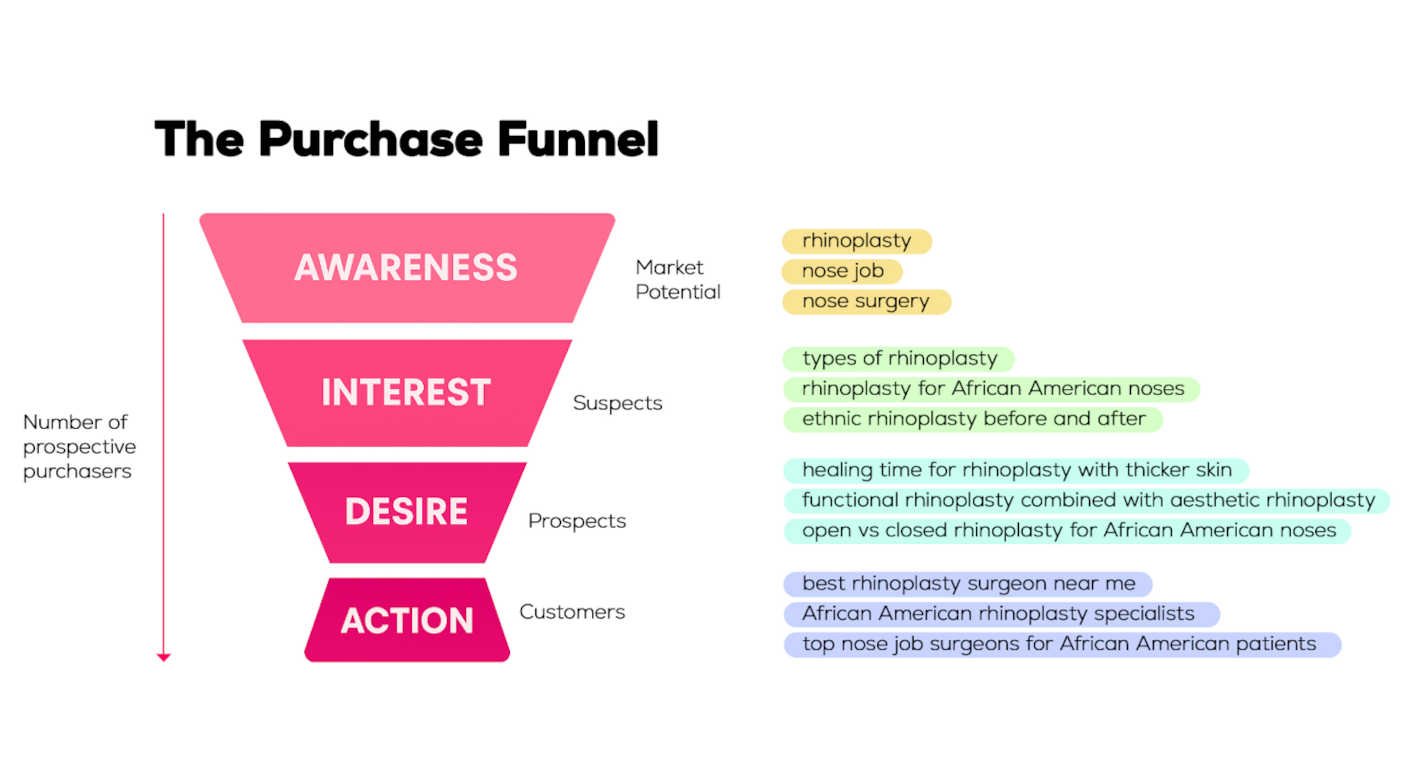
Traditional marketing assumed that prospects moved through funnel stages in predictable order. Awareness to consideration to decision.
However, modern buyer journeys aren’t linear, and research from Google and BCG suggests marketers should map influence based on behaviors rather than relying on traditional funnel stages.
The Multi-Touch Reality of Today’s Customers
Today’s prospects interact with content across multiple devices, platforms, and touchpoints before making decisions. They might find your business through a social media post, research your services on their laptop, compare options on their phone, and finally convert during a desktop session days later.
This multi-touch reality means that businesses need content available across all the channels and formats where their prospects spend time. A prospect might read a blog post, watch a video, download a guide, and attend a webinar before feeling ready to make contact. Each touchpoint builds familiarity and trust incrementally.
Understanding exactly who your customers are and how they find and interact with your brand can be incredibly informative for developing strategies to increase awareness. Making it easier for prospects to find relevant content regardless of where they are in their research process is more likely to lead to an eventual sale.
Behavioral Mapping Beats Traditional Funnels
Instead of assuming linear progression, successful marketers focus on behavioral triggers that indicate purchase intent. These might include specific page visits, content downloads, email engagement patterns, or search queries that suggest a prospect is ready for the next stage.
Behavioral mapping recognizes that prospects might circle back to earlier-stage content even after consuming advanced materials. Someone might read detailed product information but then return to basic education content to ensure they’re making the right decision. This non-linear behavior is normal and should be anticipated.
The key insight is that influence happens through accumulated touchpoints rather than single interactions. Marketers who track and optimize for behavioral patterns rather than rigid funnel stages see better results because they’re working with how prospects actually research and make decisions.
Measuring Success Through Journey Analytics
Effective buyer journey marketing requires sophisticated measurement that goes beyond traditional metrics like page views or conversion rates. Journey analytics focus on understanding which content pieces influence decisions and how different touchpoints work together to move prospects forward.
The most valuable metrics include content consumption patterns, cross-channel engagement sequences, and time-to-conversion by journey path. These insights reveal which content pieces are most effective at each stage and how prospects typically progress through their decision process.
Advanced analytics also reveal where prospects typically drop off or get stuck in their journey. This information enables businesses to create targeted content that addresses common sticking points and keeps prospects moving toward conversion. With insights from the buyer’s journey, you can anticipate needs, counter objections quickly, and tailor approaches more effectively.
Attribution modeling becomes vital for understanding which touchpoints deserve credit for conversions. First-touch attribution shows which content generates initial awareness, while last-touch attribution reveals what finally convinces prospects to convert. Multi-touch attribution provides the most complete picture by showing how different content pieces work together throughout the journey.
Start Capturing More Qualified Leads Today
Winning businesses are those that understand and strategically address each stage of the buyer journey. Companies that align marketing strategies with customer journey stages guide prospects effectively through the decision process and boost conversion rates significantly.
Marketers have noted substantial increases in revenue from segmented campaigns that target prospects based on their journey stage rather than using generic messaging. This dramatic improvement happens because stage-appropriate content feels more relevant and helpful to prospects, making them more likely to engage and eventually convert.
The implementation process starts with auditing existing content against the four journey stages to identify gaps and opportunities. Most businesses find they have plenty of Evaluation-stage content but lack sufficient Educational and Exploration content to attract prospects early in their journey.
Success requires commitment to creating valuable content consistently across all journey stages. The businesses that invest in thorough buyer journey content strategies position themselves to capture prospects at any stage of their research process, dramatically expanding their potential customer base and improving their competitive position.
Ready to transform your marketing strategy with buyer journey optimization? DFY Content Marketing specializes in creating strategic content that captures prospects at every stage of their journey and converts them into loyal customers.